


Final Notice Letter before Legal Action: What to Include

You have chased a debtor for weeks, maybe months, and the payments still are not coming. Before you rush to court, Pakistani law expects you to send one more document first, and getting it wrong can cost you the case before it even starts. A final notice letter before legal action is that document, and it needs specific language, dates, and legal references to actually hold up later.
If you are searching for a final notice before legal action letter, you are likely past the point of polite reminders and need something with teeth, a demand that puts the other side on formal record. This guide walks through exactly what belongs in that letter, from the outstanding amount and deadline to the legal consequences you intend to pursue if payment does not arrive.
At Jeelani Law Empire, we draft these notices for clients across Karachi and overseas every week, often as the first step before filing recovery suits or criminal complaints. Below, you will find what to include, common mistakes that weaken a notice, and how a properly worded letter strengthens your position before a judge.
Why send a final notice before legal action
Skipping the final notice feels like a shortcut, but it usually backfires. Pakistani courts expect proof that you tried to resolve the matter before dragging someone into litigation, and a properly dated, properly worded formal warning demanding action before court steps begin is that proof. Without it, a judge may ask why you never gave the other party a chance to pay or respond, and that question alone can delay your case by months.
It’s a legal requirement in many cases
Certain disputes make the notice mandatory rather than optional. If you’re chasing a bounced cheque, Section 138 of the Negotiable Instruments Act 1881 requires you to send a legal notice within 30 days of the dishonor before you can file a criminal complaint, and the accused then gets 15 days to pay before you approach the magistrate. Skip that notice, or send it late, and your entire criminal complaint can be thrown out on a technicality, no matter how strong your underlying claim is. The same logic applies loosely to recovery suits and property possession cases, where a final notice before legal action letter shows the court you gave the other side fair warning.
It builds the paper trail your case needs
A notice sent through registered post or a courier with tracking becomes a dated record that you can produce in court. It shows the amount owed, the deadline you gave, and the consequences you warned about, all in writing, all timestamped. Judges pay attention to this kind of documentation because it separates a genuine grievance from a rushed or opportunistic lawsuit.
A final notice is not a formality, it’s the evidence that turns your complaint into a case a judge can actually rule on.
It often gets you paid without a courtroom
Many debtors ignore phone calls and casual reminders but respond the moment a lawyer’s letterhead shows up in their inbox or mailbox. Receiving a notice referencing specific legal sections, a Supreme Court advocate’s signature, and a hard deadline signals that you’re serious and prepared to spend money on litigation. In our experience at Jeelani Law Empire, a solid percentage of clients recover their money within the notice period itself, long before any suit gets filed. That saves everyone the cost, time, and stress of a court battle.
It clarifies the record if the dispute escalates
Here’s a quick look at what a notice typically triggers depending on the type of dispute:
| Dispute Type | Legal Basis | What the Notice Triggers |
|---|---|---|
| Bounced cheque | Negotiable Instruments Act, Section 138 | 15-day payment window before criminal complaint |
| Unpaid business debt | Contract law / recovery suit | Basis for filing a civil recovery suit |
| Illegal property possession | Property law provisions | Formal record before eviction or possession suit |
| Corporate dispute | Company law | Documentation for arbitration or litigation |
Each row above shows the same pattern: the notice isn’t just paperwork, it’s the trigger that unlocks your next legal step. Without it, you’re often stuck waiting or forced to restart the process properly, losing the time you already spent chasing payment.
How to write a final notice letter before legal action
Writing a final notice yourself is possible, but the wording matters more than most people expect. A vague letter that just says "pay me or else" carries no legal weight and can even work against you if a judge sees it as harassment rather than a formal demand. Precision beats emotion here, every single time.
Start with the essential details
Before you write a single sentence, gather the facts that make the notice enforceable, the same ones the notice format Karachi courts accept is built around. Missing even one of these details gives the recipient room to argue the notice was invalid or unclear.
- Full legal names and addresses of both parties
- The exact amount owed, with a breakdown if multiple invoices or cheques are involved
- Relevant dates: contract date, due date, dishonor date for cheques
- The specific law or clause you’re relying on (Section 138, contract terms, property deed, etc.)
- A clear deadline, usually 15 to 30 days depending on the case type
- The legal action you intend to pursue if the deadline passes
Keep the tone formal and specific
Avoid generic threats like "we will take strict legal action." Instead, name the exact remedy: a criminal complaint under Section 138, a civil recovery suit, or an eviction notice and possession filing. Specific consequences carry far more weight than general warnings, and they show the recipient you’ve already consulted a lawyer rather than bluffing.
Vague threats get ignored, specific legal references get answered.
Get the format and delivery right
Every notice should be typed on letterhead, signed by an advocate where possible, and dated clearly at the top. Format alone won’t save a weak notice, but a sloppy one undermines an otherwise strong claim. Include a line stating that failure to respond within the deadline will result in legal proceedings without further notice.
Finally, send it through registered post, courier with tracking, or both, and keep the receipt. That receipt becomes your proof of delivery if the matter reaches court, and courts in Karachi routinely ask for it before accepting that proper notice was given.
Sample final notice letter before legal action
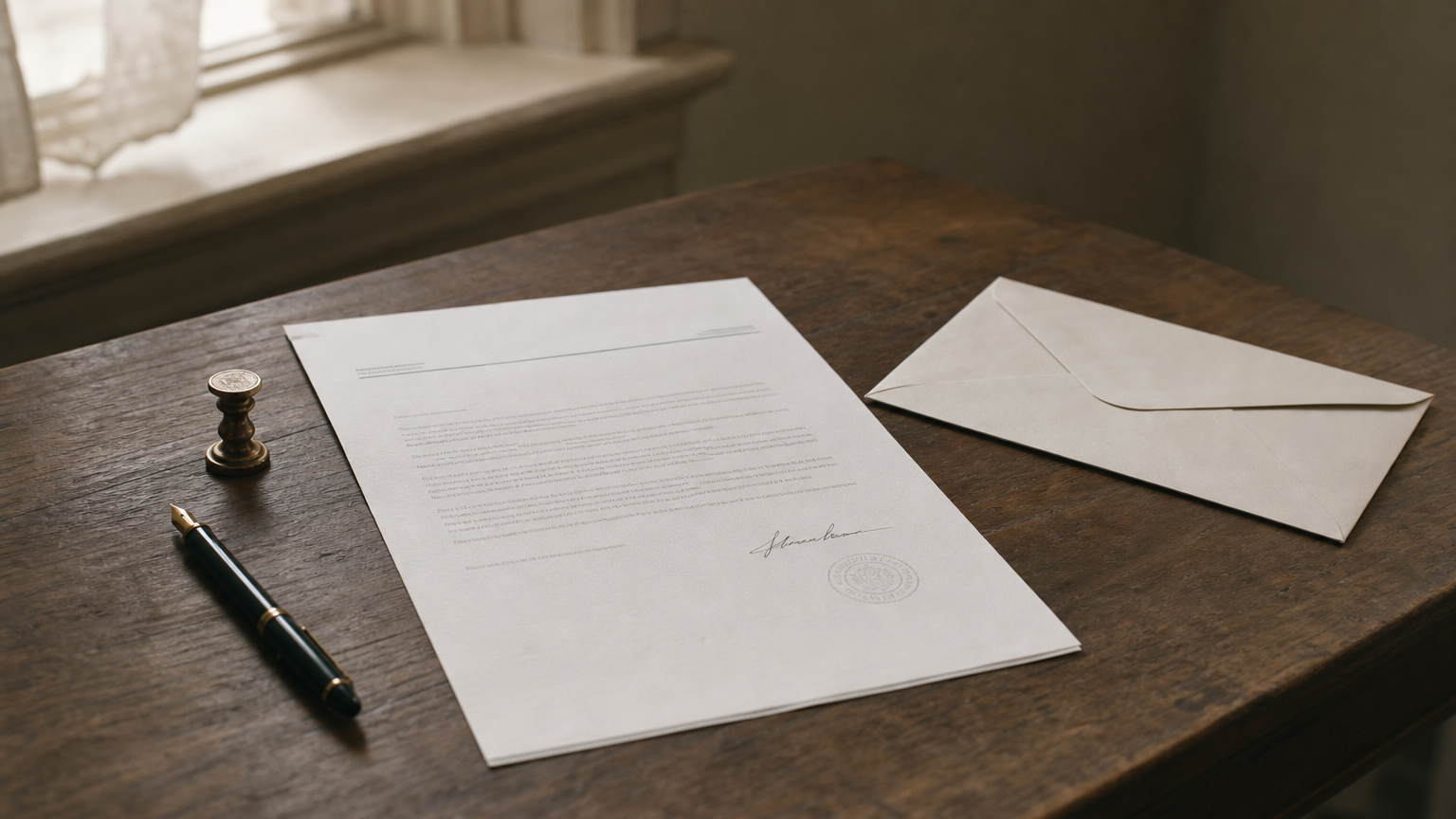
Seeing a real template makes the structure click faster than any checklist. Below is a sample final notice letter you can adapt for an unpaid business debt, following the notice format for recovery of money we draft most often for clients in Karachi and abroad. Swap in your own facts, but keep the sections in the same order, since courts expect this format and any missing piece can weaken your position later.
[Your Name / Company Name]
[Address]
[Date]

To,
[Recipient's Full Name]
[Recipient's Address]

Subject: Final Notice Before Legal Action - Recovery of Rs. [Amount]

Dear Sir/Madam,

This letter serves as final notice regarding the outstanding amount of Rs. [Amount], owed under the agreement/invoice dated [Date]. Despite repeated reminders on [Date 1], [Date 2], and [Date 3], the amount remains unpaid as of today.

You are hereby given [15/30] days from the date of this notice to clear the outstanding balance in full. Payment should be made via [bank transfer/cheque] to [account details], with confirmation sent to the undersigned.

Should payment not be received within this period, we will proceed to file a civil recovery suit against you under applicable law, without further notice, and you will additionally be liable for costs and interest incurred.

This notice is issued on behalf of [Client Name] and is sent via registered post and courier for proof of delivery.

Sincerely,
[Advocate's Name]
[Bar Council Registration Number]
[Contact Details]
Notice how every paragraph does specific work: the first establishes the debt and history, the second gives a hard deadline and payment method, and the third names the exact legal consequence. This structure holds up in court because it shows you gave fair warning before escalating.
Once you have a signed advocate’s letter like this one, sending it correctly matters as much as writing it. Registered post with a tracking number, or a courier service that provides delivery confirmation, gives you the paper trail a judge will ask about if the case moves forward. Keep every receipt and screenshot until the matter is fully resolved.
What to do if the deadline passes without payment
Silence after the deadline means it’s time to act, not wait longer. Sending a second notice rarely helps at this stage and can actually weaken your case, since courts expect you to follow through on the consequences you already stated. Once the window closes, the next move depends on what type of dispute you’re dealing with.
File the case you already named in the notice
Go back to the exact remedy your final notice mentioned and pursue it without delay, following the procedure for filing a case in Karachi’s courts. If you referenced a bounced cheque, approach the magistrate with a criminal complaint under Section 138 of the Negotiable Instruments Act, since you already gave the mandatory 15-day window. For unpaid business debts and outstanding loans, file a civil recovery suit in the relevant district court, attaching the notice, delivery receipt, and any supporting invoices or contracts.

If you threatened it in the notice, you need to file it now, or the next notice you send loses all its weight.
Gather your documentation before you file
Courts move faster when your paperwork is already organized. Before heading to court or a lawyer’s office, pull together:
- The original signed notice and proof of delivery (courier receipt or postal tracking)
- Bank statements, invoices, or the dishonored cheque itself
- Any written communication where the debtor acknowledged the debt
- Contact details and address confirmation for the recipient
Keeping these organized from day one saves weeks once litigation starts.
Consult an advocate before your next step
Jumping straight into a filing without legal review often leads to procedural mistakes that delay the case further. A Supreme Court advocate can confirm which court has jurisdiction, whether interest and costs can be claimed, and whether your evidence meets the bar for a criminal versus civil filing. This step matters even more if the debtor is overseas or in another province, since jurisdiction rules shift depending on where the contract was signed or the cheque was issued.
Our team at Jeelani Law Empire handles this transition from notice to filing regularly through our strategic notice drafting and dispatch service, and getting the paperwork right the first time avoids months of delay in Karachi’s courts.
Moving forward after your final notice
Getting the wording right on a final notice letter before legal action is what separates a demand that gets ignored from one that gets paid. You now know the legal basis behind it, the details that make it enforceable, and what to do the moment the deadline passes without a response. None of that guesswork should cost you months in court because a notice was vague or missed a filing deadline.
Whether you’re dealing with a bounced cheque, an unpaid business debt, or a property dispute, the notice is your first real move, not a formality to rush through. Get it drafted properly, sent with proof of delivery, and backed by an advocate who knows Karachi’s courts.
If you’re ready to send yours or need one reviewed before it goes out, talk to the Supreme Court advocates and legal consultants at Jeelani Law Empire, and let them handle it from notice to filing.